
My 5-Step Physical Activity Plan For Reducing Alzheimer's Risk

One of my first-ever clients after graduation was diagnosed with Alzheimer’s just a month before seeing me. She was funny and seemingly fit and healthy. She saw me twice a week, and for a while, I wouldn’t even have known something was off. Then we started to have the same conversation each week. Soon she forgot when she was coming to see me. After a year, she wasn’t even trusted to walk to our centre to see me, in case she got lost. Now, she’s in a home. She was one of my first stark reminders that health can simply fade.
There’s probably one high-profile case of Alzheimer’s risk which is more well-known than the rest. Chris Hemsworth is most recognised for his role as Thor in Marvel’s Universe. However, in real life, he’s just as human as the rest of us. A few years ago, he discovered that he was up to 12x more likely to develop Alzheimer’s disease than the average person. He has two copies of the APOE ε4 gene - just like 1 in 50 of us do.
Upon this discovery, he decided to make some lifestyle changes which would give him the best chance of avoiding, or at worst, delaying the onset of Alzheimer’s if it were to develop. Meditation, breathwork, fewer alcoholic drinks, and sauna use, to name a few. But also exercise.
“Whatever work I’m doing for my brain health benefits the rest of my body — we turned it into a positive.”
But just how much can a physically active lifestyle reduce the risk of cognitive impairment? Let’s take a look.

Housekeeping
Here are a few quick reminders before we begin:
You can access my entire archive of Muscle Monday and Workout Wednesday educational newsletters here.
You can purchase my guide, 20 Habits to Change Your Life ($5), here.
You can get 10% off EVERY order at Awesome Supplements.
What is Alzheimer’s Disease?
Alzheimer’s disease is the most prominent form of dementia, accounting for up to 70% of all cases.
Generally, symptoms include various forms of cognitive decline. Memory starts to fade, and problem-solving becomes more difficult. Forgetfulness becomes more and more common, and daily tasks become harder to perform. And whilst this is most common in over-65s, people of any age can be diagnosed. Unfortunately, Alzheimer’s is a progressive disease; it gets worse and cannot be cured.
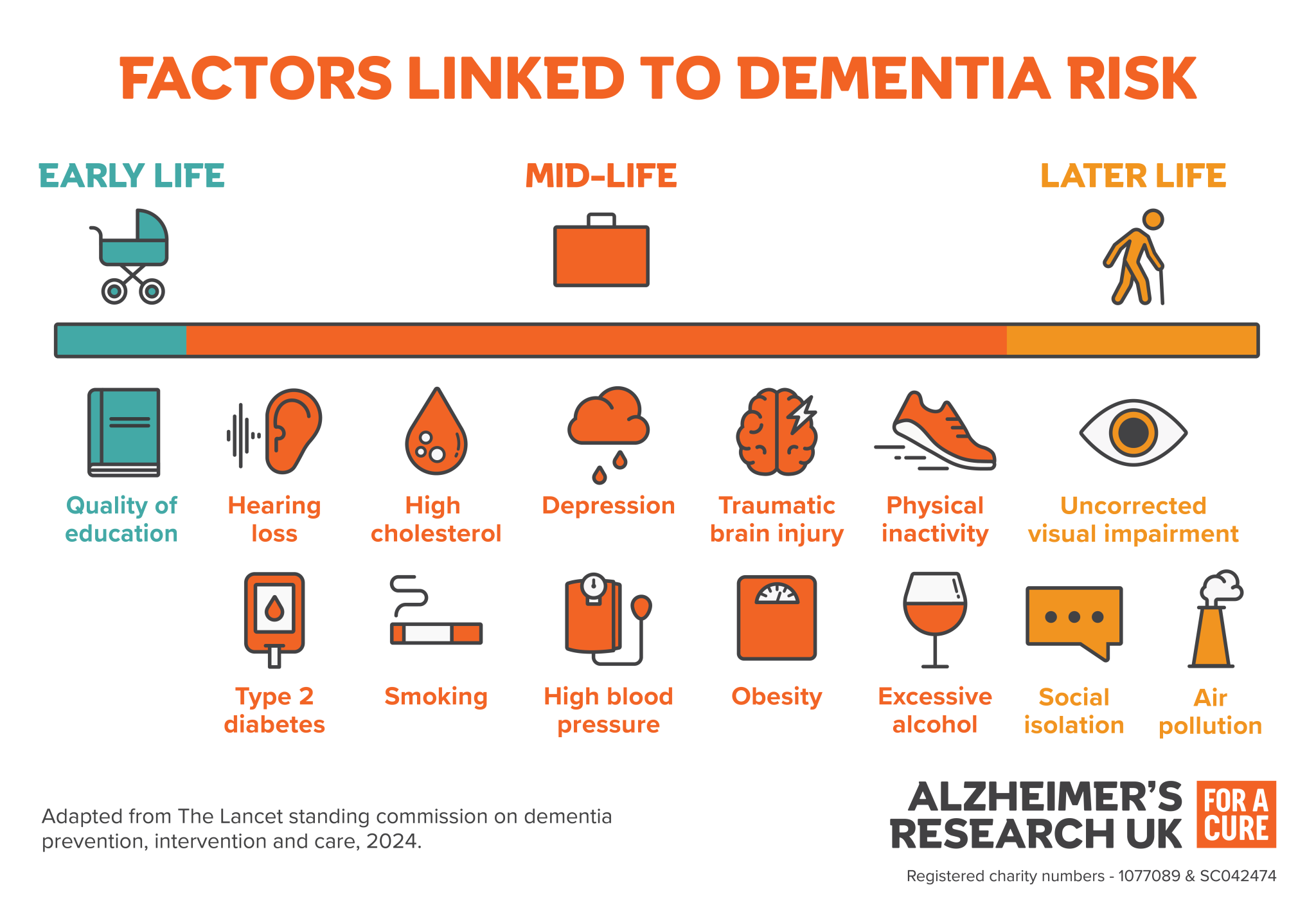
There appears to be a lifestyle element to the risk factors for developing Alzheimer’s. In fact, research suggests that roughly 40% of the risk of developing Alzheimer’s can be attributed to modifiable lifestyle factors. The usual poor habits: Excessive alcohol consumption, smoking, obesity, physical inactivity, and high blood pressure all appear to increase the odds of developing the disease. However, there are some more unusual risk factors involving social isolation: poor eyesight and hearing can strip someone of their ability to form social connections and lead to loneliness. This itself can contribute to cognitive decline. Unfortunately, being a woman looks to be a non-modifiable risk factor, with up to 70% of all cases presenting in women.
There’s a strong genetic component, too…
The Genetics Behind Alzheimer’s
Ok - time for a bit of biology 101. This is very oversimplified, but there’s no need for most of us to know the in-depth science behind it.
Genes make you, you. They determine your eye and hair colour, whether you have curly or straight hair, your earlobe type, and so much more. When we are born, we inherit two copies of these genes from our parents. They each give us one variant of these genes. For example, if both parents give you a variant for brown hair, chances are you’ll be born with brown hair.
There is a gene called APOE, which stands for apolipoprotein E. We all have it, and it is one of the ‘risk’ genes which can influence our risk of developing Alzheimer’s. To be clear, tens of genes play a role in Alzheimer’s development, but the APOE gene is probably the most important.
Now, there are 3 variants of the APOE gene:
Variant ε2 may be protective against developing Alzheimer’s.
Variant ε3 is neutral - no significant change in Alzheimer’s risk.
Variant ε4 may increase Alzheimer’s risk.
Some quick maths tells us that, if we take one of these 3 variants from mum and one from dad, there are 6 possible combinations. The table below outlines the relative risk of each combination.
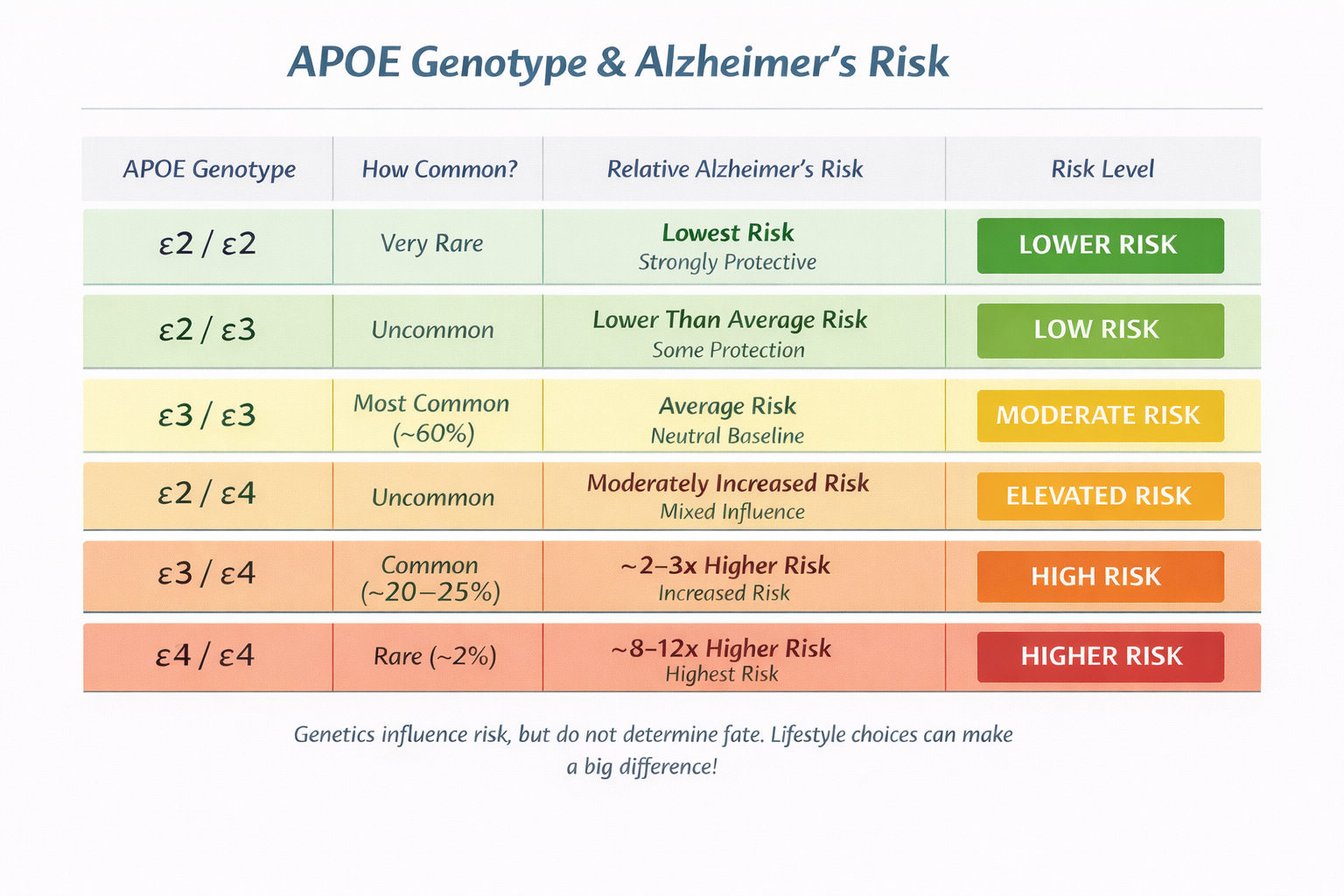
As you can see, Chris Hemsworth’s 4/4 combination is the rarest and the one with the highest relative risk. However, we must remember that genetics do not set a fixed path; they only increase or decrease the likelihood of developing Alzheimer’s. People with the 4/4 variant can live without ever developing Alzheimer’s, and those with the 2/2 variant can be unfortunate enough to develop it against the odds.
What Happens To A Brain With Alzheimer’s?
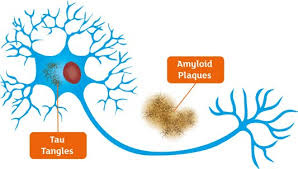
The development of Alzheimer’s disease is linked to an accumulation of certain proteins within the brain. These protein clusters are known as tau tangles and amyloid plaques.
Before we explore how these proteins degrade nerve and brain function, we first need to quickly recap neuron anatomy.
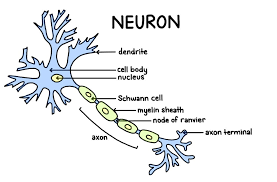
Neurons are responsible for transmitting signals around the body. There are roughly 90 billion neurons in the brain, with each of these forming several thousand connections. If these neurons don’t work correctly, then basic functions, memory and motor skills suffer. This is the case with Alzheimer’s.
Each neuron has three basic structures:
A cell body
The axon
The axon terminal
There are also dendrites which reach out to search for signals.
Tau Tangles
Normally, Tau proteins are housed in the neuron axons. They help to maintain the integrity of the cell so that messages can be transmitted successfully. However, in the case of Alzheimer’s disease, the Tau proteins can escape from the axons and move freely inside the cell. Unfortunately, this is bad news, since these proteins are toxic to the cell in this state, and ultimately cause the neuron to die.
Dead neurons = missing and incomplete signals.
Dodgy signals = Memory, motor skill, and cognitive decline.
Amyloid Protein Plaques
Amyloid proteins undergo a slightly different process. They begin life as amyloid precursor protein (APP). The APP then undergoes processing and can evolve into amyloid-beta. This is a toxic protein which can clump together and form plaques, which disrupt the normal functioning of neurons and the brain. In healthy people, amyloid-beta is cleared before it can do any harm. However, we think that those with Alzheimer’s either overproduce or struggle to clear amyloid-beta.
Interestingly, there’s a potential link between amyloid and tau. It may be that once a critical level of amyloid-beta has accumulated, this triggers tau tangles to be produced, which initiates a vicious cycle of neurological dyfunction.
The Role Of Exercise
Physical activity is neuroprotective. When you go for a walk, attend that gym class, or lift those weights, you’re benefiting your brain just as much as you are your heart, lungs, and muscles.
There are a few potential reasons for this. The first is obvious - increased blood flow to the brain. If we raise our heart rate, we increase blood and oxygen flow and delivery to the muscles and the brain. This is absolutely vital, especially from the age of around 35 onwards. Multiple studies have noted that regular aerobic exercise, such as fast walking, for 40 minutes at a time, three times per week, can lead to marked improvement in memory recall, reaction time, and motor function within previously inactive older adults. It can actually increase the size of the hippocampus, the part of the brain responsible for memory.
Resistance (strength) training may also produce similar results, although it may not necessarily be as effective as aerobic training for improving memory recall. Importantly, it does result in the release of chemicals called myokines. These chemicals are signalling proteins which are released in response to heavy muscle contractions. Interestingly, they appear to be very protective against the onset of Alzheimer’s disease. One of these myokines is called Irisin, which helps a series of processes in the brain to increase the size and number of connections in the hippocampus. There’s also evidence to suggest that the myokine family can also aid in the clearance and reduce the production of, amyloid-beta, the toxic protein which can accumulate in neurons.
Exercise also seems to reduce oxidative stress and inflammation within the brain. You’ve probably heard of C-reactive protein, IL-6, and TNF-α before. These are markers of systemic, low-grade, chronic inflammation within the body. These markers exist in higher concentration if you are in poor health. Diabetes, cancer, obesity, dementia and metabolic dysfunction are all linked to chronic inflammation. Exercise combats this, whilst also reducing the risk of these diseases.
Lifelong Exercise vs Getting into Exercise in Midlife
There’s clear evidence to suggest that being active across your lifespan is very effective at lowering Alzheimer’s risk. One study reported that participants who regularly exercised before the age of 50 saw a less extreme level of cognitive decline than their less active peers by the time they hit 70 years old. Interestingly, this cognitive boost in active individuals was observed even in the presence of amyloid plaque accumulation.
But what if you've never really been active, and now you're reading this, aware of a family history of dementia, and worrying about your own future? Well, there’s good news.
Even if you just pick up exercise after the age of, say, 50, you can still reduce the likelihood of developing Alzheimer's. In fact, some research suggests that having high levels of physical activity in or after your midlife can be associated with a 40% reduced risk of developing Alzheimer's and other forms of dementia.
The key here, as it always tends to be, is being consistently active. It’s no good being really fit for two months per year. You’re better off being moderately fit all year round, for decades, and most of us can achieve this with some simple steps.
My Exercise Checklist For Avoiding Alzheimer’s
Again, I'll re-emphasise...exercise cannot completely eradicate Alzheimer's risk, in the same way that genes aren’t a concrete path to a diagnosis. But it can certainly lower your risk by a significant margin. If you're looking for some simple, actionable steps, then this is what I would do.
Reduce your sitting time to less than 6 hours per day.
Remember, physical inactivity is just as important as physical activity. Being fit is not as simple as exercising for half an hour, but then sitting down for the rest of the day. Break up your desk time, or sofa time, every hour if you can.
Raise your heart rate for half an hour per day.
Aerobic exercise. Zone 2. Whatever you want to call it. Get some fresh air and go for a walk. Get on your bike. Go to the gym and hit the rower if you must. But get the heart rate above 100 bpm. You can break it into manageable chunks if necessary, instead of doing the half hour in one go. This will put you in the minority - fewer people than ever are hitting physical activity goals.
Perform resistance training on 2-3 days per week.
We’ve already spoken about the benefits of myokines. Heavy muscular contractions are great for the brain and body. If you're not sure where to start, I've got countless sample workouts for all ages and abilities on my Substack page.
Aim for 8000 steps or more every day.
Steps are great. Time outdoors if possible. The impact of regular walking improves bone health, too. If you want bonus points, walk without headphones and use any walking time as an opportunity to be comfortable with your own thoughts.
Really raise your heart rate once per week.
High-intensity exercise is a vital method for counteracting age-related cognitive and physical decline. Once per week, even if just for a couple of minutes, try to walk the stairs as fast as you can. Or find a hill and march up there. If you need to, fill a rucksack with books and wear that to make it harder. It doesn't need to be fancy, but it does need to get your heart rate higher than your regular physical activity does.
Conclusion
You can’t reduce your Alzheimer's risk to zero, but you can potentially halve it. And it’s something which you can start at any age. If you've taken a genetic test in your 20s, then don’t wait until you're 45 to take action. These are the steps that Chris Hemsworth is taking, and if it’s good enough for Thor, it’s good enough for you.
awesome article, Ben! Love the 5-step plan!!