
My Top 10 Exercises For Longevity

Last week’s newsletter on my Top 10 Exercises To Prevent Falls was a big hit - thanks to all who have read it so far. You can tap the link below to check it out for yourself.

Due to this success, I’ll be creating a mini-series over the coming weeks on my “Top 10 Exercises For…”. This week, we will explore some of the best exercises to predict longevity and health span. This topic always brings me back to a client I worked with extensively shortly after my graduation. Always one to question pretty much every aspect of our sessions, I remember him asking why we were on the rowing machine that particular day.
“Because it’ll help your heart and lungs and let you live longer…”
“…who said I want to live longer? I don’t want to live longer; I want to improve my future quality of life”
Until that point, I hadn’t massively considered this. Being in my early 20s, I naively just thought most people in their 60s and 70s might value an extra 5 or 10 years with their loved ones. I hadn’t considered what this might actually look like for them. And I agree - what’s the use in living for longer if you can’t do the things you want to? When I get older, I want to be able to play around with my grandkids. I don’t want them to come and visit me when I’m 95 and just see me dribbling in the corner of my room. If you share that sentiment, then this article is for you. I’m going to outline my top 10 exercises not just to live longer, but to give you extra good years. Something for your muscles, heart, lungs, and overall health. Keep reading if this sounds interesting.
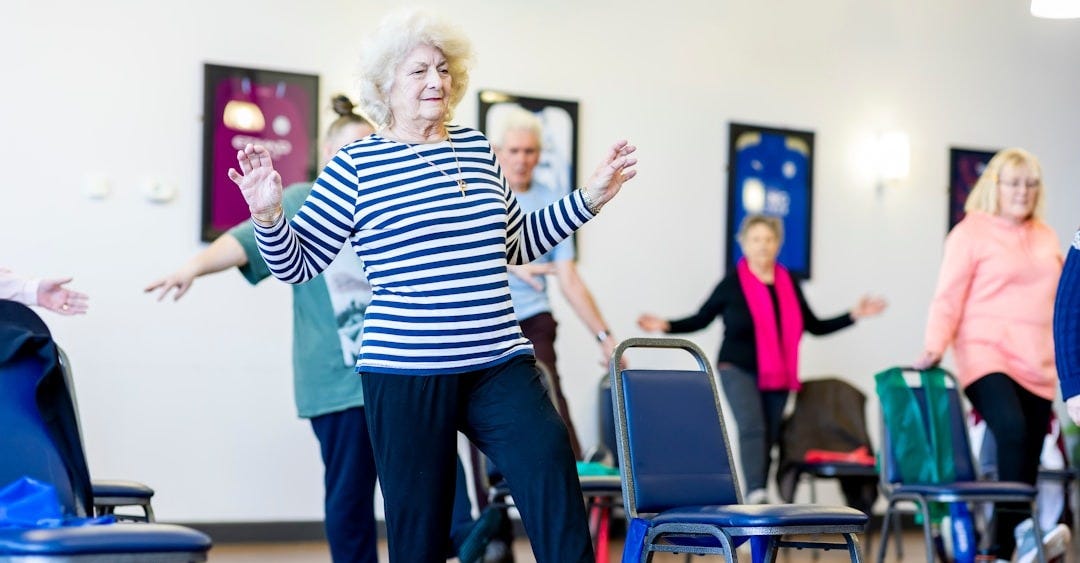
A Quick Self-Test At Home
As is tradition in my more recent newsletters, let’s go through a simple test you can perform at home right now. It’ll give you a baseline score and, more importantly, it will highlight whether you have any room for improvement concerning your lower body strength and endurance, which is closely linked to longevity, since strong thighs are one of the keystones of healthy ageing.
The test itself is the Wall Sit test and involves the following:
Find a wall that you can comfortably lean against;
Walk your feet forward by a couple of feet;
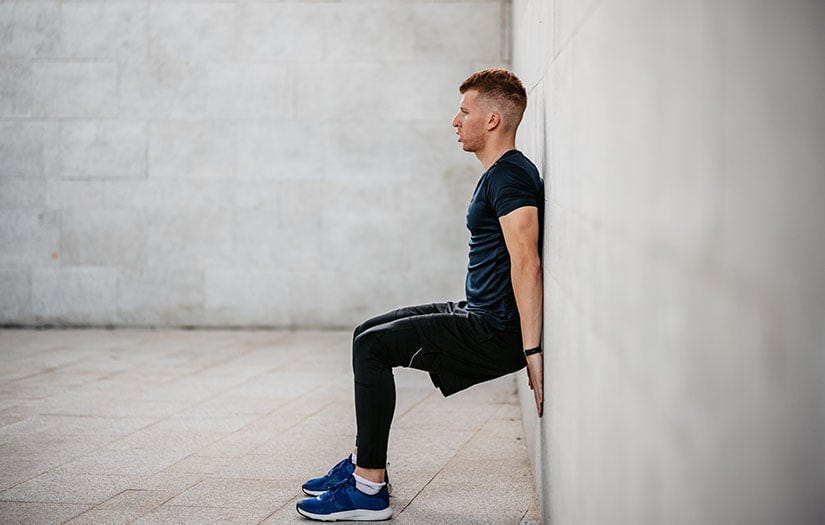
Slide your back down the wall, taking you into a squat position;
Squat as low as you can, ideally at least to the point where your hips and knees are level (see picture below);
See how long you can hold this for. Your hands must be on your hips or against the wall, not on your knees or thighs.
Results
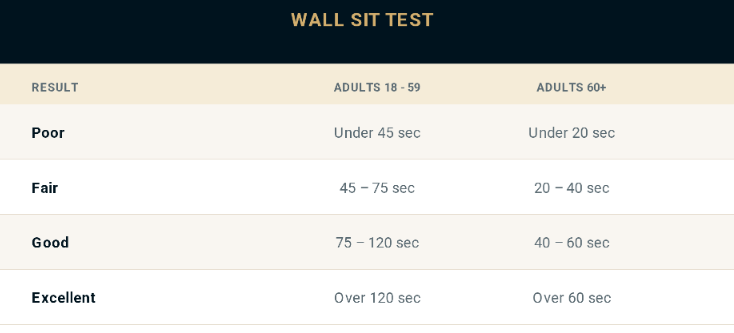
Now I must stress that the following targets and standards are based on limited data, but are my personal preference and extensive experience with a range of clients of all ages and abilities. They are slightly generalised and are heavily weighted towards minimising the decline in lower body function as you age. However, even if you’re a spritely young 20-something, you should be aiming for the best possible scores. If you find yourself scoring in the ‘poor’ or ‘fair’ categories below, then it might be worth trying some of the following exercises regularly…
My Top 10 Exercises
I have a feeling that some of these may be controversial picks, but I do firmly believe that almost anyone can and should be performing these exercises if possible. We know that high levels of aerobic fitness, mobility, strength (and therefore muscle mass), and staying injury-free are the cornerstones of longevity and a good health-span. The following ten exercises will go a long way to getting you there, but don’t worry, you don’t need to be doing all ten. You may find that just three or four will do the job. However, as always, check with your doctor before starting a new exercise plan.
So, let’s go straight into it…
1. Any Deadlift Variation
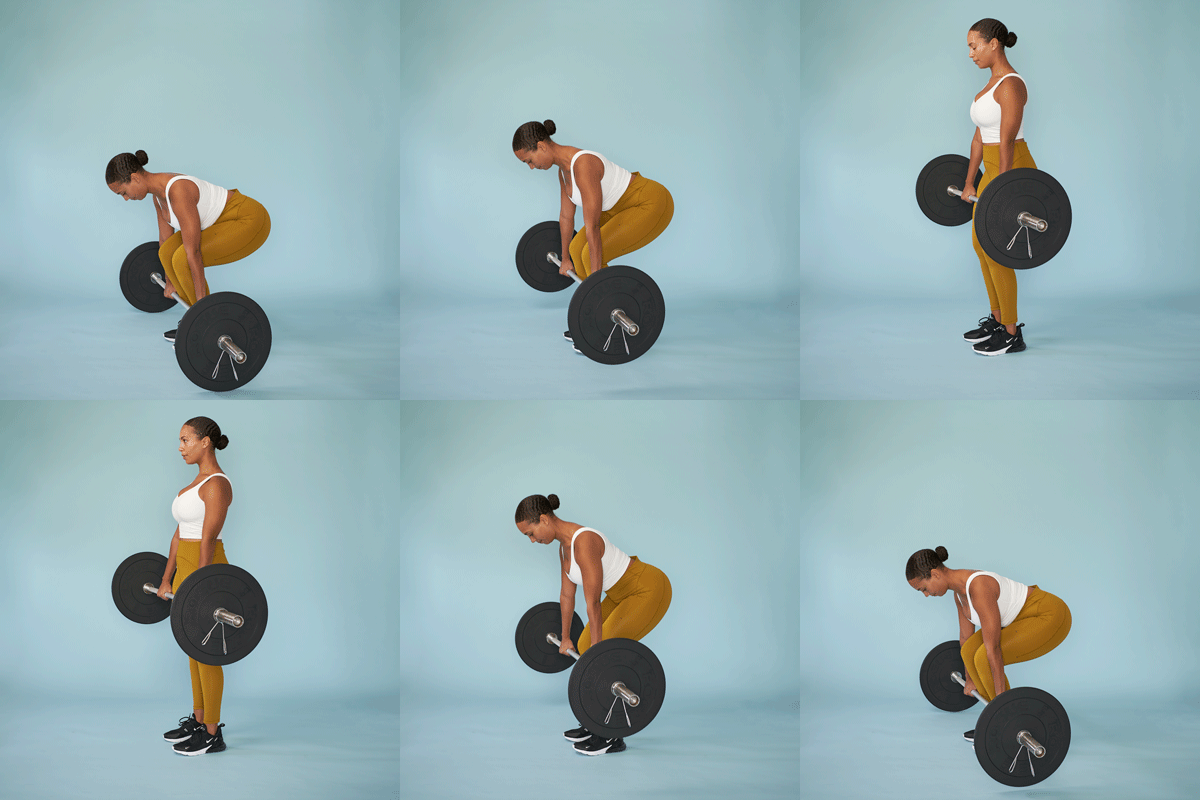
Deadlifts are probably one of the most efficient exercises out there. They work a vast array of muscles in your posterior chain (a series of muscles running down the back of your body). They also improve your grip strength, which is one of the greatest predictors of mortality out there. Don’t let the fearmongers online put you off. A hip hinge is a movement which requires some learning, but almost anyone can do it well with enough practice. With the correct form and load, you’ll notice huge benefits after adding these into your routine.
Barbell deadlifts, trap bar deadlifts, dumbbell deadlifts, kettlebell deadlifts, Romanian deadlifts, good mornings, stiff-legged deadlifts, deficit deadlifts, single-leg deadlifts…there are lots of options.
2. Goblet squats
Find something heavy-ish which you can pick up. Hold it at chest height. Squat down. Stand up. Repeat. One of the most basic exercises out there, yet it may well hold the key to staying strong for decades. This exercise works major leg muscles, but also challenges your upper body. If you’re at home, a big book could be heavy enough to provide a challenge. You can do this pretty much anywhere, and, as an added bonus, it’ll strengthen your quads and look after your knees.
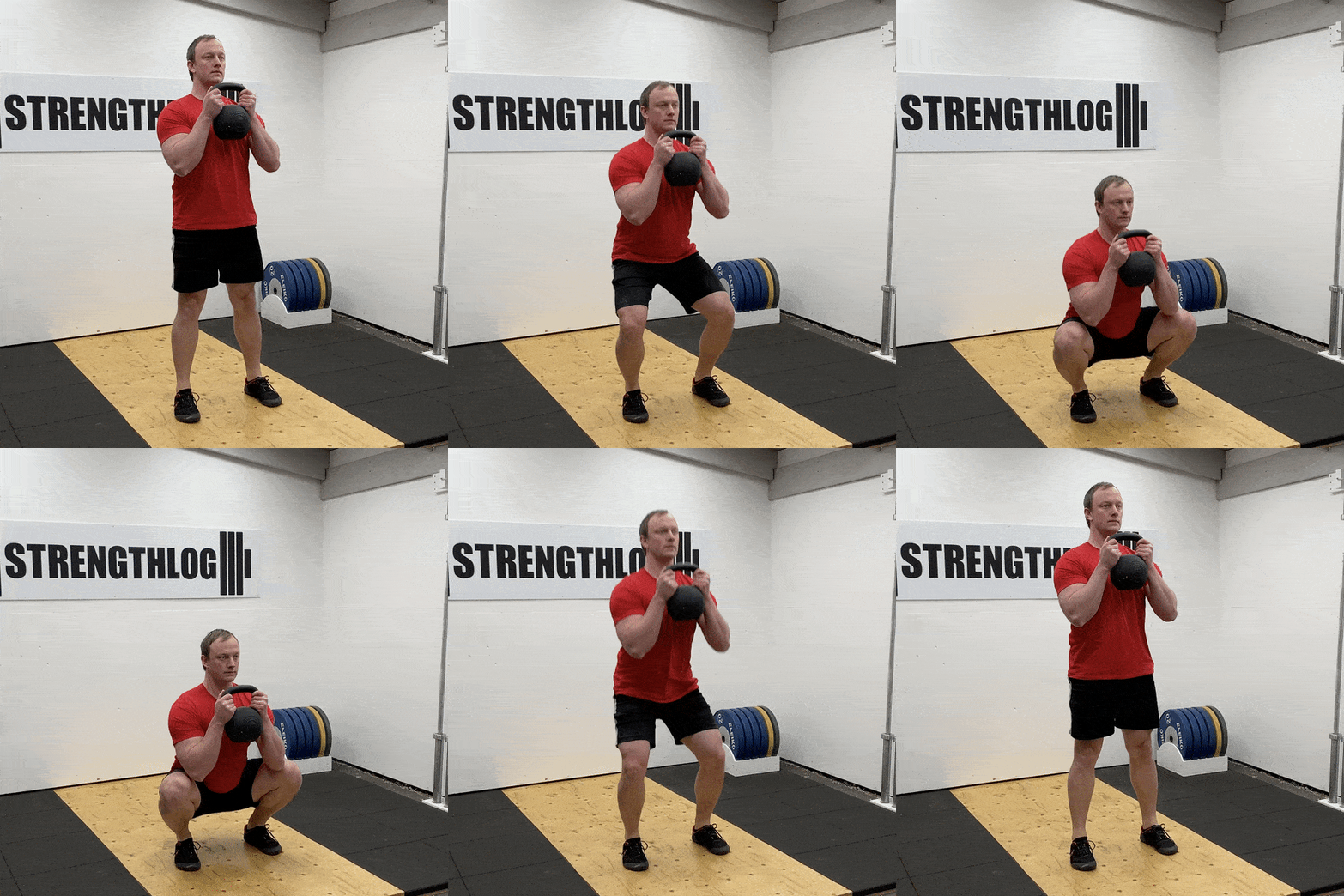
3. Interval Training
A high VO2max is desirable at any age, but it can be the difference between independence and having a full-time carer for those on the older end of the spectrum. It essentially refers to how efficiently your body can take in and use oxygen. If climbing stairs gets you out of puff, or getting up from watching TV is more challenging than it used to be, then you might benefit from interval training. Remember, intensity is relative. It doesn’t matter what other people are doing; if you’re working hard, then that’s going to benefit you.
One of the simplest examples of interval training is the 10x1-minute interval session. It involves 1 minute of hard work that gets your heart rate up, followed by 1 minute of rest, repeated up to 10 times. What you do in those work intervals is up to you. It could be hill walking, jogging, sprinting, cycling…it doesn’t matter as long as you need to rest for a minute after it. Once a week should do the trick.

4. Any Row Variation
In this context, the term ‘row’ refers to an exercise in the gym where you might pull a weight toward your chest. This category of strength exercise is hugely underrated because it trains the often-ignored muscles in your back, arms and shoulders, which play a huge part in posture. If you’ve ever noticed that many older individuals are hunched over or leaning forward, you’ll know exactly why this is so important.
Examples include: bent-over rows, seal rows, bench rows, single-arm rows, cable rows, face-pulls, renegade rows, TRX rows and Pendlay rows.
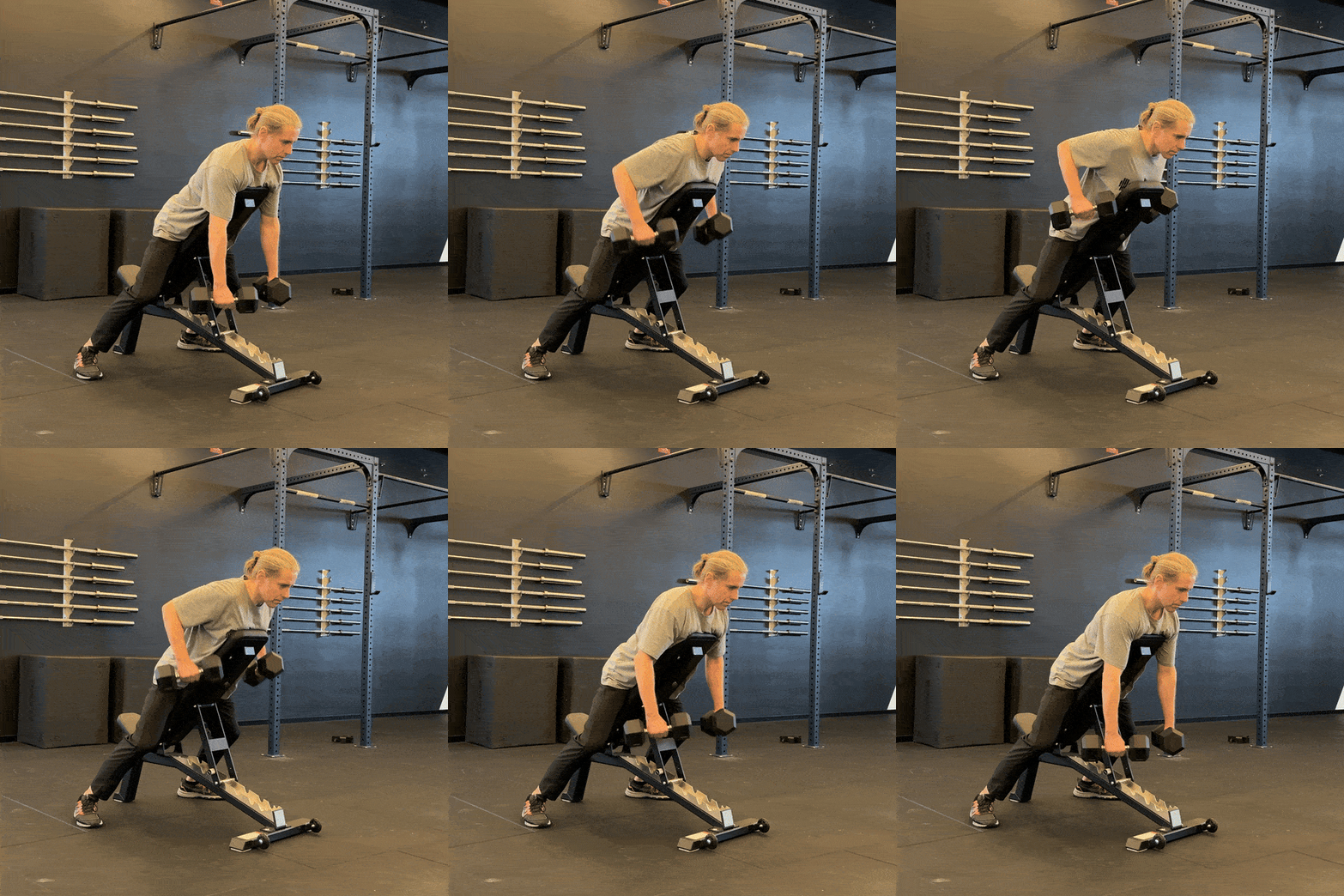
5. Yoga, Pilates, or Tai Chi
I’m grouping these together, which itself may be controversial, as they are excellent and individual disciplines. However, they share certain qualities, such as being primarily bodyweight in nature, improving strength, balance and co-ordination, and having a very low barrier to entry. These days, reformer Pilates is very popular, and the use of springs to provide additional resistance is a brilliant way of providing external load and an increased stimulus for strength training in populations who may not like the idea of going to the gym.
I would strongly recommend that everyone try all three of these to see which they prefer the most. You will most likely find that one of them is good fun, social, and makes you feel energised and strong. Plus, from a longevity perspective, just getting up and down from the floor, as is commonly required in Pilates and yoga in particular, is a skill worth practising.

6. Walking
As little as ten minutes of walking per day might be enough to extend your life and health span. But you do have to pick up the pace a tad. My recommendation here is to go for a brisk 10-15 minute walk after two of your meals, every day. You’ll accumulate steps, raise your heart rate, improve your metabolic health and lower your blood sugar levels. As a nice bonus, walking does wonders for your mental health.

7. Sled pushes
Perhaps a bit of a rogue choice here and maybe more of a personal preference. Pushing heavy things gives a real sense of achievement in my book. It also, similar to deadlifts, uses a huge number of muscles in one go, as well as adding some healthy strain on the cardiorespiratory system. They also have the added bonus of being slightly more joint-friendly than other gym exercises. To start with, aim to add 50-75% of your body weight to a sled and see if you can push it. If your gym doesn’t have a dedicated sled setup, you may be able to use a curved treadmill and set it on the highest resistance instead.
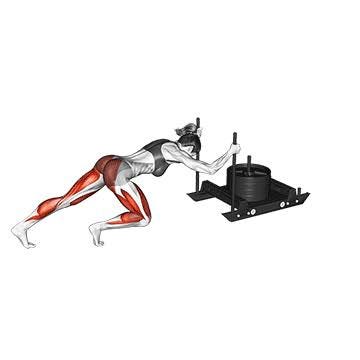
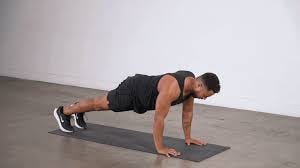
8. Planks
Not every exercise requires movement. Simply holding a plank by engaging your core and keeping a nice straight back and hips can build strength and endurance. These can be done by resting on your hands or on your forearms, so the only real barrier here is whether you can get up from the floor to do them. The beauty is that they can be done anywhere and at any time. We should be aiming to hold for a minute or so across the age ranges.
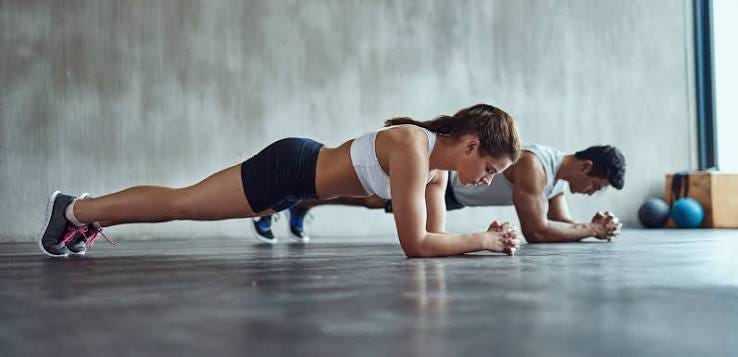
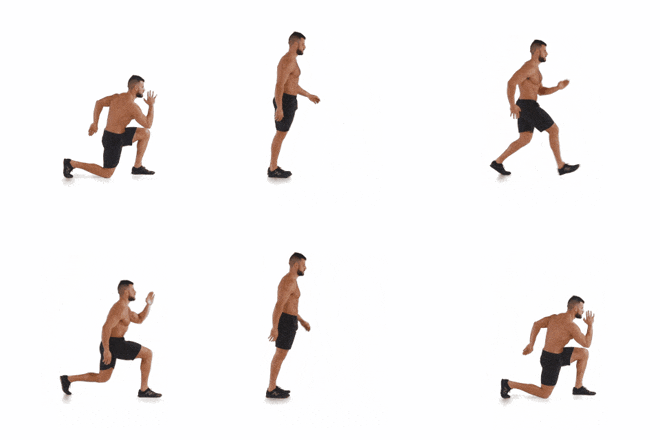
9. Split squats, lunges, or any unilateral work
Any regular readers of my work will know that I strongly believe in the benefits of single-leg exercises. Not only do they challenge balance and strength at the same time; they build robustness in the knee, hip and ankle joints. At the very least, we know that standing on one leg while brushing your teeth is a good way to build ‘real-life’ fitness at home, which helps to improve balance and reduce fall risk. Other examples include any lunge or split squat (including those dreaded Bulgarians), knee drives or step-ups.
10. Any push-up variation
My list ends with one final exercise which can be done at home. Push-ups are a great way to work the major muscles in the chest, arms, and shoulders, and they don’t require any equipment. If a full push-up is too tricky for you, then you can try kneeling versions, wall push-ups, or countertop push-ups. As a simple rule to follow, the higher your hands are, the easier the movement becomes. There’s a reason that everyone seems to know someone who does a set of push-ups every day as soon as they get out of bed - an easy way to add strength work to your daily routine, and it takes maybe two minutes at most.
Did You Find This List Useful?
Remember, this is my personal list and is not exhaustive by any means. If you think I’ve missed something, let me know in the comments below!
Don’t forget, my comprehensive free guide on how to build stronger hips can be downloaded by hitting the link below. This is my most detailed guide to date, so don’t miss out!

If you’d like exclusive guides, walkthroughs, myth-busting and more, you can upgrade to a paid subscription. You may also get a mention and shout-out in my upcoming book on building exercise habits that stick. This is currently on track to be published by the end of the year, exciting!
As always, please do share, like, comment and restack if you enjoy my work. It is the number one way to spread my work and costs absolutely nothing. Thanks and see you next time!
I do love a sled push too but I’d have any sort of carry instead in my top ten. I don’t do interval training but do small game training instead- 5 aside football twice a week with friends is more fun than HIIT!
I nearly put carries in! Decided on the deadlifts instead, but great shout.
Team sports/SSGs are a great way to get some high intensity exercise in. Just because it's not called 'HIIT', doesn't mean it's not 'HIIT' 😁 and like you say, more social and more fun!