
Tight Hamstrings? Stretching Might Not Be The Answer

I’m going to let you in on a secret. You may think that, because I work in the industry, I have perfect strength, endurance, mobility, and flexibility. However, this isn’t true. I have two big weaknesses which come back to haunt me every few months. The first one is my Achilles and calf complex, but that isn’t important today. My major issue comes with my hamstrings. They have always been weak and tight, which has led to a few further issues with posture and athletic performance down the line. I know exactly what I need to do, but I always find an excuse not to do it. One day, I was talking to a client about this, and it struck me: Knowing what to do is actually the hard part. Most people with troublesome hamstrings don’t know where to start. So that’s what I want to resolve today. If you’re feeling stiff and tight in the back of your thighs, then this is for you.

Housekeeping
Here are a few quick reminders before we begin:
You can access my entire archive of Muscle Monday and Workout Wednesday educational newsletters here.
You can purchase my guide, 20 Habits to Change Your Life ($5), here.
You can get 10% off EVERY order at Awesome Supplements by using the code ‘EZEP’ at checkout. Check out the creatine pack below.
A Common Phrase
If I had to list my top-most-heard phrases in fitness, I think ‘tight hamstrings’ might well be in the top three. Alongside ‘brace your core’ or something to that effect. It seems that we are more than happy to, rightly or wrongly, self-diagnose tight hamstrings. But then why is it still such a prominent issue?
Before we delve into how to determine if our hamstrings are tight and how to address them if they are, we first need to understand why they become tight in the first place. This is not as simple as you might think…
What Causes Tight Hamstrings?
There are a few different factors which could contribute to the tightness of hamstring muscles. I should probably clarify - in this instance, I’m referring to chronically tight hamstrings, i.e., hamstrings which feel tight and stiff all of the time, as opposed to any aches or tightness which might be caused by, say, a tough gym session or sudden tear/injury.
By the way, if you’d like further reading on what the hamstring muscles are and how they work, then I’d recommend my quick write-up on this from 2024. You can read it by tapping here.
Compensation & Overuse
As I have written about many times before, the modern lifestyle causes us huge health issues. Our increased sedentary time is hard on our hips, perhaps more than any other joint. Many readers will already be familiar with my newsletter on fixing your hip flexors. One downstream drawback of hip flexor issues is that your hamstrings have to pick up some of the slack. Take a look at the image below for clarification.
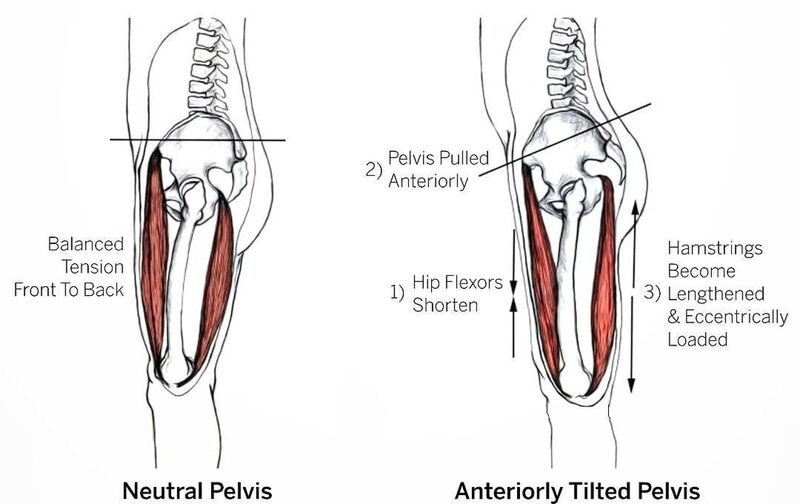
There are 3 simple steps which can contribute to the ‘tightness’ in hamstrings:
Prolonged sitting or sedentary behaviour contributes to the tightness in the hip flexors at the front of the hips and thighs.
This ‘pulling’ at the front of the hips causes an anterior pelvic tilt. Imagine that your hips hold a bowl of water. If you have perfect posture, this bowl of water remains steady and does not overflow. Anterior pelvic tilt pulls the front of your hips and the front of the bowl downwards. This would cause water to spill out over your toes.
Because of this tilt, your hamstrings at the back of the thigh become stretched and actually elongated. They also become very weak. The same goes for the glute (buttock) muscles, but again, that’s a story for another day.
This then raises a very valid question. If the hamstrings are actually longer than expected, not shorter, then will stretching them resolve the sensation of tightness, stiffness, and a lack of flexibility? We will get on to this later.
Previous Injury
The hamstrings are part of a chain of muscles that run down the back of your body. We call this the posterior chain. There are many big joints which form a part of this chain, and the hamstring happens to join two of them: the hips and the knees.
If you’ve previously injured any of the surrounding musculature (glutes, calves, lower back muscles) or any other muscles in this chain that have had to adapt to your work or posture, such as in pelvic tilt, then there’s an elevated risk that your hamstrings may well be tight and weak. There are many nerves which do run from the lower back down toward your toes, such as the sciatic nerve, so it is easy to see how interlinked a previous injury may be to current tightness or discomfort in your hamstrings.
Athletes in certain sports may also be more susceptible to hamstring issues. Football (soccer) players will have very strong quads relative to their hamstrings due to the frequent kicking actions. Those who sprint and change direction regularly may also be at greater risk.
How do I Know If Mine Are Tight?
If you’ve read this so far and you think that you might have tight hamstrings, then let’s get a concrete answer for you. There are a few simple tests which you can perform at home to confirm if your hamstrings are tight and weak.
The Straight Leg Raise (SLR) Test
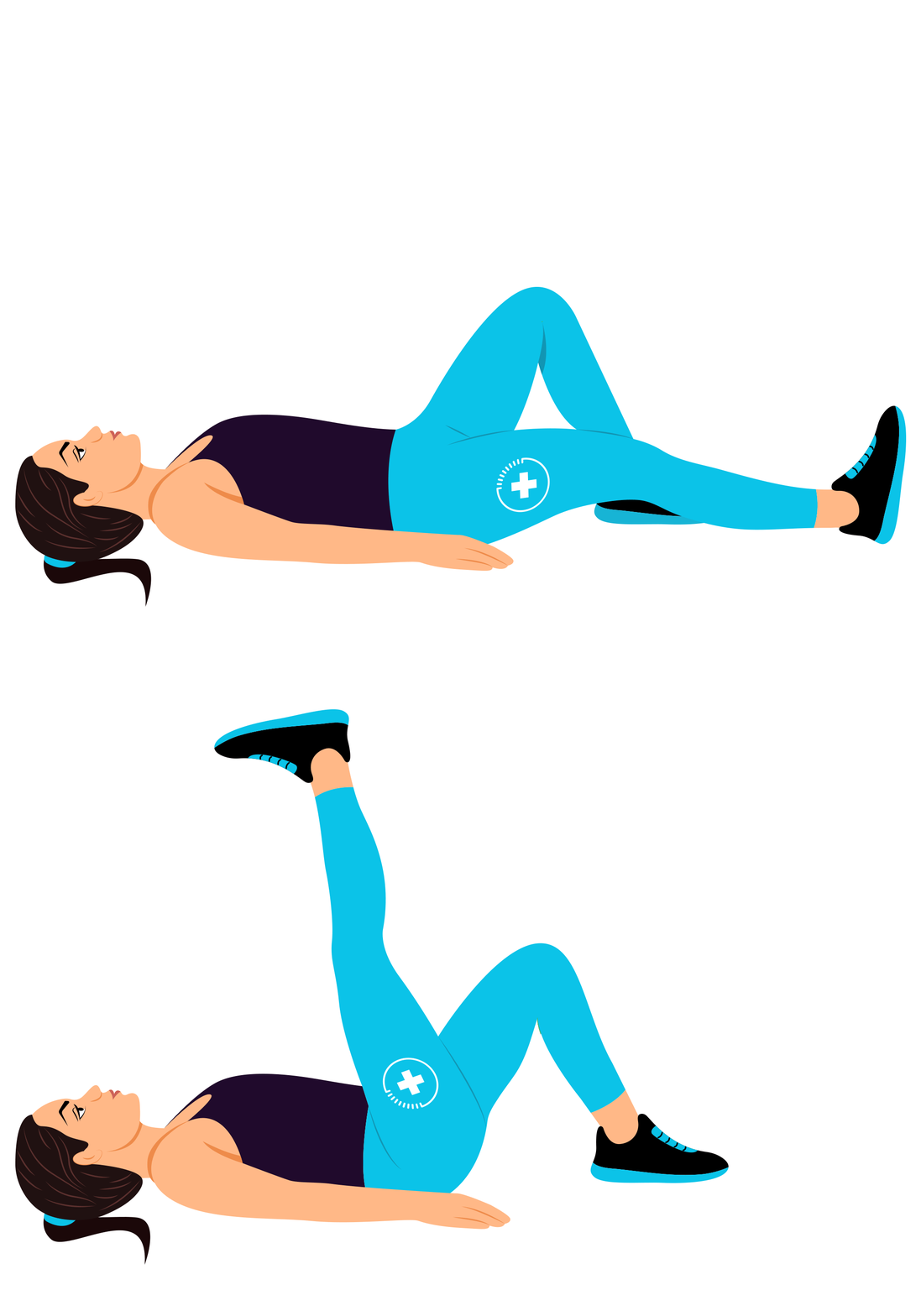
As in the GIF below, lie on your back with one leg bent and one leg straight out in front. Slowly raise your straight leg, keeping the knee straight, as high as you can. You should be able to get your heel directly above your hips, giving you a hip angle of 90 degrees. If you’re nowhere near this, then you’re probably tight.
Toe Touch Test
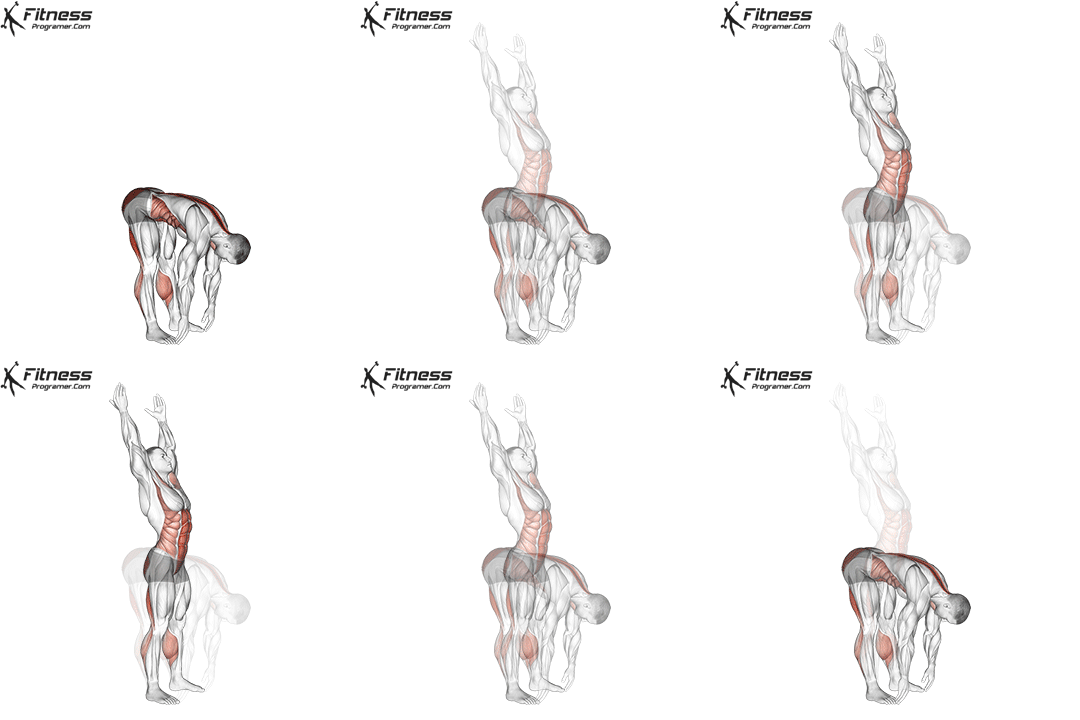
Simple enough. Keep your legs straight and reach down toward your toes. If you can touch your toes without bending your knees, then you’re probably OK.
Sit & Reach Test (modified)
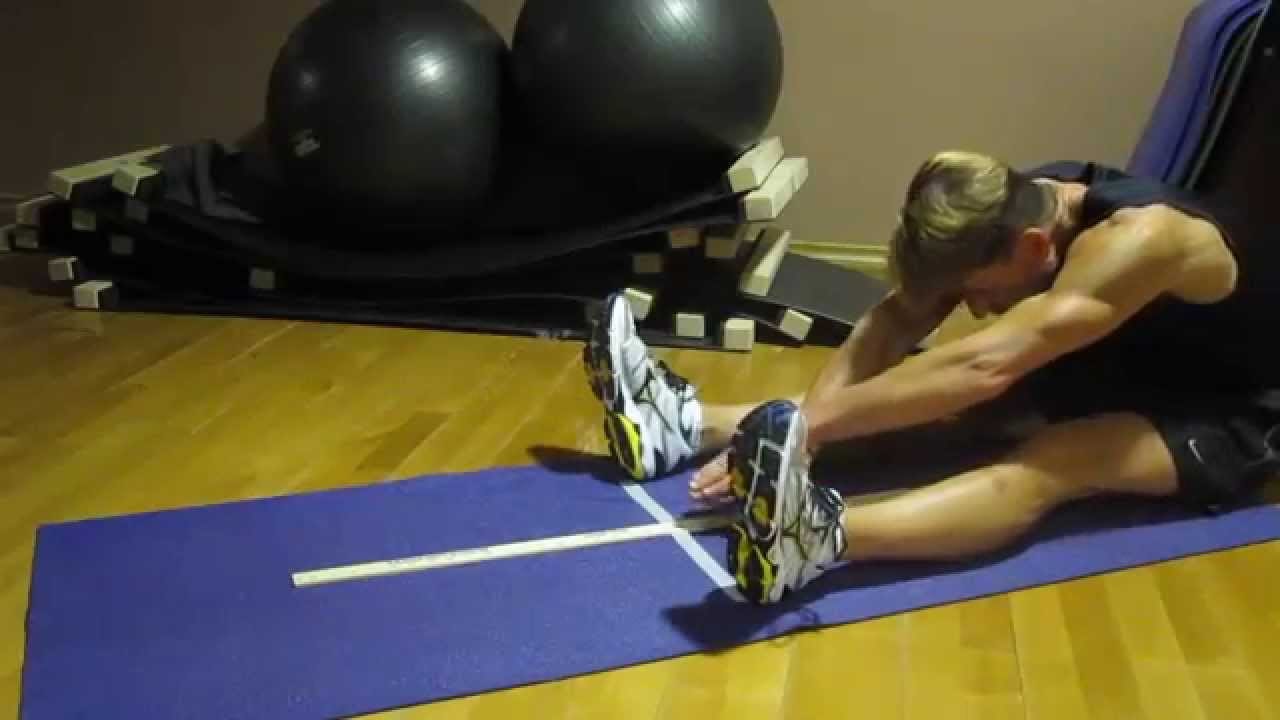
The traditional sit-and-reach test requires a special box. However, you can rig up a simple at-home testing system with just a tape measure or just some tape. Sit with your legs out in front of you in the shape of a ‘V’. Mark where your heels meet the floor. Keeping the knees straight, try to reach as far as you can between your legs. Ideally, you’re able to reach past that heel mark on the floor. If you can’t, then you’re probably tight.
How to Fix Tight Hamstrings?
Well, the first step here is to remember that in many cases, it’s a sensation of constant increased tension, not necessarily tightness or a muscle length issue. Therefore, whilst it may seem logical to stretch the hamstrings to make them less tight, this is typically a very ineffective method.
I’ve devised a simple 3-step solution below. It might not work for everybody, but in my experience, it does help a significant portion of clients who are looking for better hamstring health.
Step 1. Identify your weaknesses
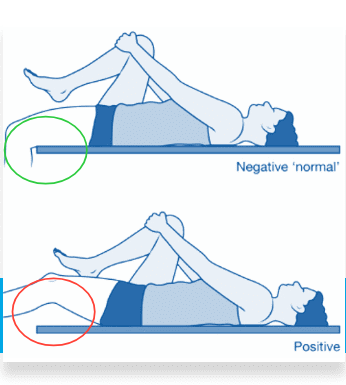
Take another look at the picture of anterior pelvic tilt at the beginning of this article. Is this you? If you have a severe anterior pelvic tilt, you’ll probably be able to eyeball it. However, if you want a more robust test, then you can test for tight hip flexors by using the Thomas test.
Lie on your back, knees off the edge of the bed/surface. Bring one knee up to your chest. If your other leg comes up and away from the edge of the bed, then you have tight hip flexors. If this is true, and you also scored poorly on the hamstring tests in the section above, then you probably have some form of pelvic tilt.
Step 2. Strengthen (Core, hamstrings and glutes)
Perhaps contrary to logical belief, focus should now move to strengthening these muscles, not lengthening them. Remember, in the case of anterior pelvic tilt, the hamstrings are already lengthened and under tension. This whole process has actually weakened your core, hamstrings and glutes. We need to fix this.
Let’s take a look at 3 exercises for each of these muscle groups. You can strengthen these muscles by simply performing these exercises just twice per week. Aim for 3 sets of 15 reps, or 8 reps per leg, if applicable. As always, if these GIFs aren’t working, open this email the Substack app.
Core exercises
Hollow body hold
Low plank
Deadbugs


Hamstring exercises
Romanian deadlifts (RDLs)
Banded leg curls
Nordics


Glute exercises
Glute bridges (Single leg)
Split squats
Step up


Step 3. Modify your lifestyle
If your hamstring issues stemmed from a pelvic issue, then we need to stop the hip flexors from shortening again. It sounds simple, but it does require effort. There are a few habits we can take here to aid this process:
Avoid sitting for prolonged periods
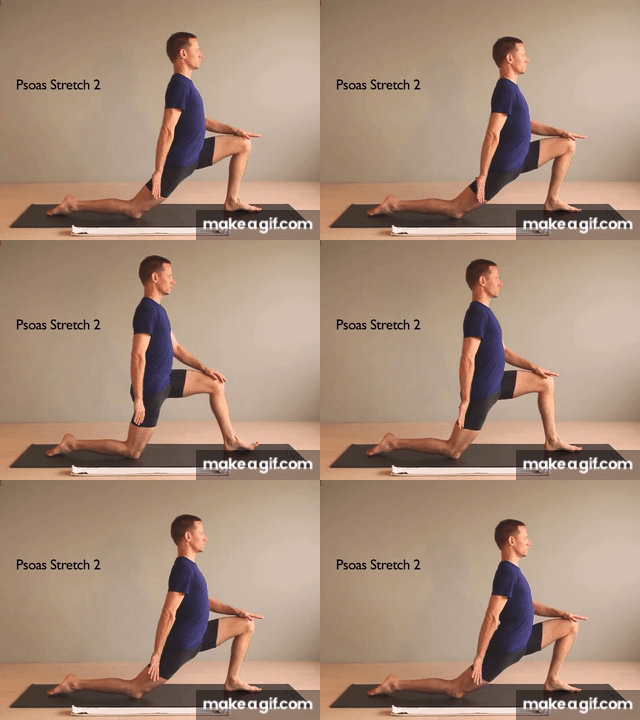
Unlike the hamstrings, stretch the hip flexors (GIF below) regularly - once a day, even.
Get up every hour if working at a desk, or better still, try a standing desk.
Exercise regularly. Try to increase your heart rate for half an hour per day. This can be as little as a fast walk, up to a hard circuit in the gym.
Small Changes Add Up
Finally, remember that it will have taken you a long time to develop hamstring tightness and weakness, so it won’t resolve itself in a week. Make these changes and stick with them for a month. You should notice some improvement. If you don’t notice any change within 12 weeks, then seek further assistance.
In addition to strengthening and really just a variation on the theme, I find end range resistance to really help. For the entire posterior chain, reach down as far down your legs as you can until you feel that tightness. Hold your legs with your hands and then try to pull up out using the back of your legs. You are basically doing an isometric resistance exercise at your end range. I've found this is the quickest and most reliable way to fix chronic tightness.
On YouTube you can find lots of videos on various body parts with the keyword PAILs / RAILs.
Thank you for the interesting article! I never realized static stretching could actually decrease running efficiency. I’m definitely going to focus more on dynamic movements and strength work from now on!