
A Physiologist's Ultimate Muscle Protocol for The Adult Over 40
Including a 6 week plan to follow

As an exercise professional who specialises in clinical populations, one of the demographics I am regularly presented with is the peri- and post-menopausal woman. However, I’m also recently seeing a lot more men of a similar age as they become more and more aware of the hormonal changes they undergo after the age of 40. In fact, I wouldn’t be surprised if we saw an upsurge in the number of couples training together over the next few years as both men and women aim to combat the age-related changes they undergo as middle age approaches.
I don’t usually make strong statements in the introduction of my newsletters, but, before I get into the main piece, it must be stressed that you must be strength training after the age of 40. You can’t out-walk muscle loss. You can’t out-walk osteopenia or osteoporosis. You can’t protein shake your way through a hormone shift. At this age, you really do ‘use it or lose it’. And by ‘use it’, I mean lifting weights, working close to failure, progressing over time, and finding a system which lets you stay consistent for decades, not weeks. After the age of 40, you don’t just start to lose lean tissue; you have to work harder than ever to get the same benefits of exercise.
So let’s walk through the exact stimuli that you need to hit to look after your muscles after the age of 40.

A Common Scenario With A Less Commonly Known Cause
When potential clients come to me, or I get DMs asking for help, the majority are over the age of 40. And they often cite that regular activities are feeling harder than ever:
Climbing stairs
Going shopping
Getting up off the floor
That cycle that they do every week without fail
They’re exercising (and in some cases they have been for decades), but in a complete contrast to what they thought would happen, they’re actually starting to struggle with activities of daily living instead of finding them easier.
And I feel that part of the problem is because we know so much about the term sarcopenia, but relatively little about the term anabolic resistance. We know that we will lose muscle unless we exercise after 35-40 years old, but we aren’t told that the muscles we keep then require a stronger signal to induce the benefits of exercise than we might have needed at age 20.
Sarcopenia - The progressive, age-related loss of lean tissue (muscle mass) and strength from the age of ~35, often associated with a loss of function and independence. (Note: As I wrote in my piece on power training recently, we lose type II muscle fibres at a disproportionate rate. This is why power and heavy-loaded resistance training is so important.)
Anabolic Resistance - The reduced ability of the body’s muscles to grow, recover and repair in response to typical anabolic signals such as exercise and protein intake.
Hormones - The Driver of Change
I’m well aware that this could be a whole newsletter in its own right, and maybe I should do this in future. But I’ll cover the absolute essentials in this article today.
Men
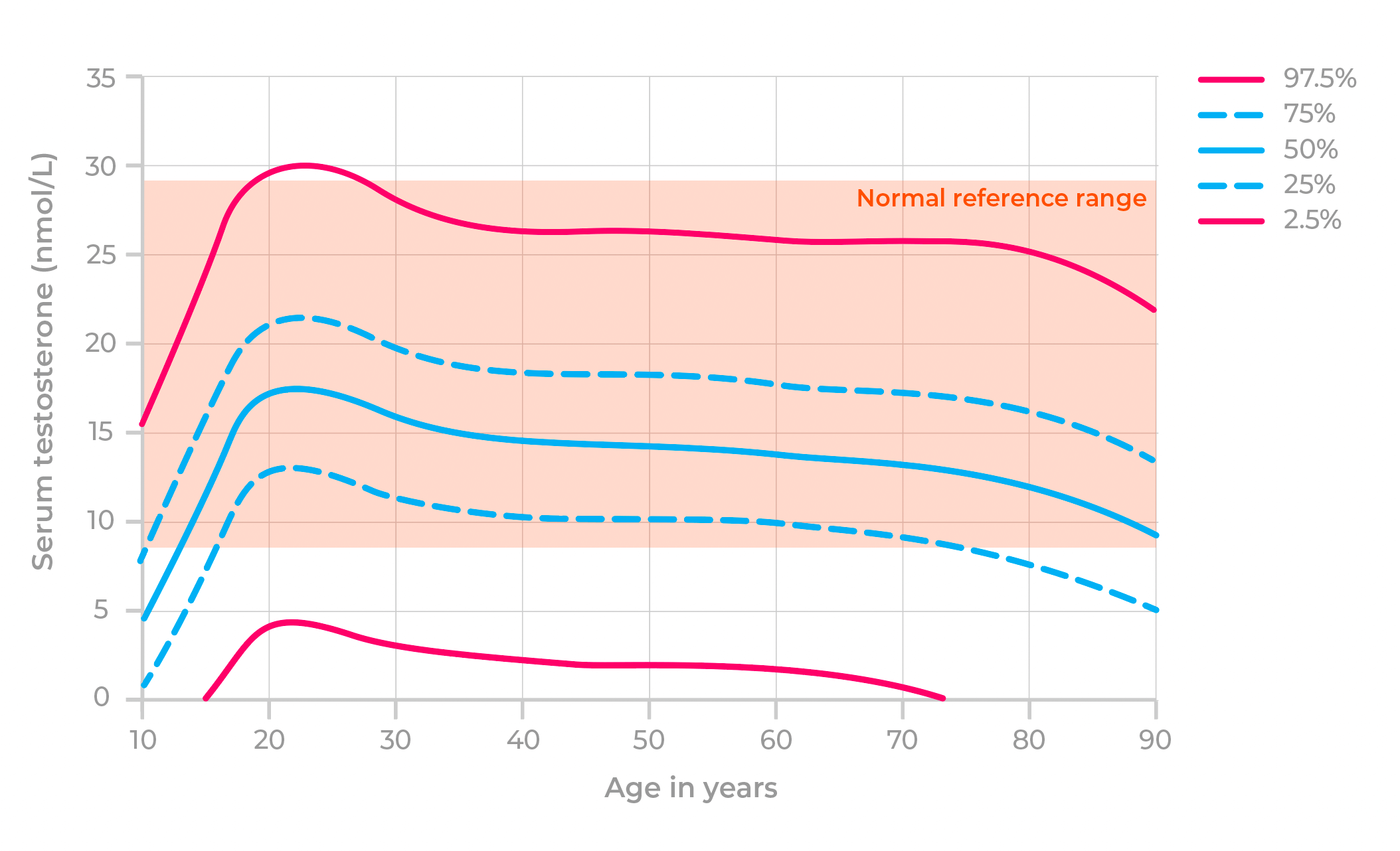
The hormone to be aware of here is testosterone. Typically, this hormone peaks in your 20s before consistently declining by 1-2% every year from the age of 30 or so. Does this pattern remind you of anything? It’s almost the same pattern that lean tissue and muscle mass follow across the lifespan! And this is for the simple reason that testosterone is an anabolic hormone - it encourages muscle gain. If you ever want proof of this, go to the dodgy-looking shredded guy in your local gym and ask to try some of his steroids…you’ll soon notice some changes.
If you think your testosterone levels are low, and you’re experiencing reduced sex drive, chronic fatigue, issues in the bedroom, increased abdominal fat, low mood and worsening gym performance, it may be worth getting your levels checked. Just make sure to get a measure of your free testosterone, since this is what your body finds biologically available.
Women
We have all heard of the menopause here. And, although I am an expert on exercise in clinical populations (of which peri- and post-menopausal women are included), I am at the distinct disadvantage of being a male in my 30s, which will inevitably lead some people to think I lack credibility on the topic.
Before I go any further, I will say this: Don’t be fooled into thinking you need a menopause-specific workout. Any well-rounded gym plan, consisting of resistance training, cardiorespiratory training, mobility work and plyometrics, will do a brilliant job. This, alongside sensible recovery that accounts for sleep issues, aches, pains, and fatigue, is the primary target.
Surprisingly, a large portion of both men and women seem unaware that most women also possess a lower, but normal level of testosterone at any point. Like with men, levels tend to peak between the ages of 20 and 30 before steadily declining. Again, if you want proof that testosterone plays a large part in athletic performance, have a look at what happens when women with abnormally, but naturally elevated levels of testosterone compete against women with standard levels. However, that’s a discussion for another day entirely; I digress…
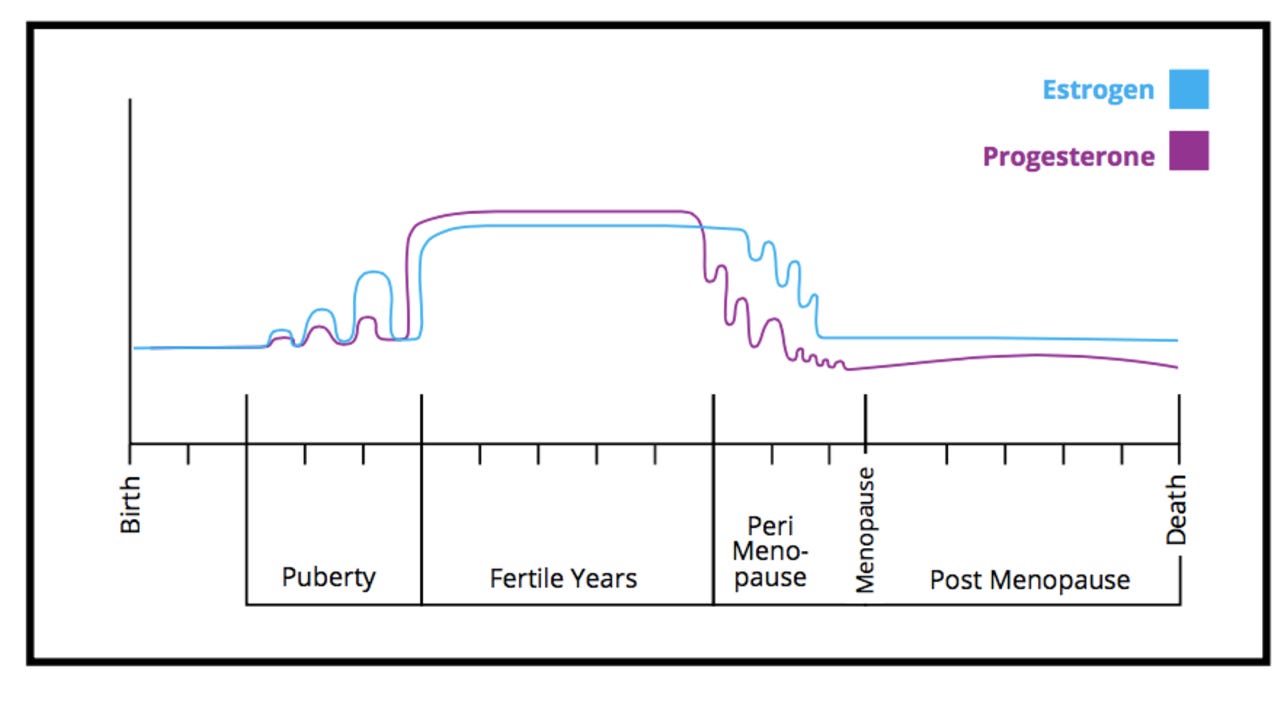
Estrogen is the major player to be aware of here. This hormone, alongside several other roles, aids in the process of muscle contraction. In fact, it acts on the proteins which literally cause a contraction. The levels of estrogen vary broadly throughout the lifetime, especially due to the rise and fall of this hormone during the menstrual cycle. The basic facts are these: Estrogen levels surge during pregnancy, become erratic during perimenopause, before falling sharply after this period. It is this permanent (unless on HRT) and rapid fall which affects exercise performance.
Less estrogen = reduced contractile force.
It also plays a part in recovery from exercise, which is one of the reasons why recovery appears to take longer in peri- and post-menopausal women compared to their younger selves. Of course, there are plenty of knock-on effects on bone health here, too, although that is a topic for another time, and I’m happy to write about this if you like; just let me know in the comments.
Anyway, all of this to say that the hormonal influence on exercise, anabolic resistance, sarcopenia, and increased relative difficulty of physical activity after the age of 40 cannot be ignored or downplayed.
How to Identify Anabolic Resistance or Sarcopenia and What To Do About It?
So what does this look like? If you are experiencing any of the following, then you might well be suffering from either one of, or both, sarcopenia and anabolic resistance even though you may already be exercising regularly.
Visible muscle wastage
Losing strength
Increased recovery time between exercise bouts
Low energy and increased fatigue
Increased abdominal fat (bigger around the belly)
The key to combating these symptoms is actually pretty simple, but most people who come to me are missing at least one piece of the puzzle. They are:
Exercise load
Progressive overload
Adequate protein intake
Recovery
Let me outline these for you.
Exercise Load
The intervention that we are most familiar with. We all know that we should be strength training at least twice per week. This can take the form of gym work, classes, yoga, Pilates, whatever. However, there’s one caveat here. We need heavy loaded strength work at least once per week. That’s machines, dumbbells, kettlebells, and barbells. Maybe bands, but ideally free weights. The reason for this will become obvious later in the article. So, if you’re happily getting through four yoga sessions a week, please do consider either adding in or substituting in one gym session. The research is unequivocal: heavier gym exercises, done with correct form, extend your healthspan and independence, staving off the negative effects of sarcopenia and anabolic resistance for longer than bodyweight exercises alone.1
Progressive Overload
The most often ignored signal needed for everyone over the age of 40. You simply cannot repeat the same exercises for the same number of reps at the same weight for 10 years and expect to continue on an upward trajectory. By now, you’ll be able to guess that anabolic resistance will put a stop to that. You can do the same session three times a week for years, but eventually you’ll notice your recovery starts to slow and your ‘real life’ strength starts to suffer. This is why lifting free weights or machines helps. Adding weight, sets, reps, or time under tension is much easier when you’re in the gym following a personalised program. You may still be OK if you go to classes, but unless they’re programmed well in advance, you’ll struggle to progress your workload and fight anabolic resistance consistently.
Adequate Protein Intake
We all know that protein intake is important; otherwise, protein shakes wouldn’t still be around. As a very rough, general rule, we should be aiming for up to 1.2g of protein per kg body mass, every day. For those in the USA, 0.6-0.8g per pound of bodyweight is probably absolutely fine. It is also more than attainable for most to achieve this, if you don’t get overly precious about your intake preferences. For example, I start almost every day with overnight oats consisting of oats, protein powder, chia seeds and water. Low in calories, high in fibre, a minimum 30g dose of protein and keeps me full for a long time. Simply aiming for one protein source with every meal (lean meats, eggs, lentils, fish, beans, tofu, tempeh) is a great place to start.
Recovery
The phrase ‘growth happens when you sleep’ has never been more true. You deliver the stimulus in the gym, but the progress occurs outside of the gym. If you’re not sleeping adequately, you’re going to struggle to see long-term improvements to your quality of life. You spend a third of your life in your dreams, so you may as well try to make as much of this time high in quality. When in doubt, use the 10-3-2-1 rule: Avoid caffeine 10 hours before bed, have your last meal and alcohol 3 hours before bed, switch off from work 2 hours before bed and avoid screens in the final hour leading up to bedtime.
Summary: Make sure that you’re nailing your exercise load, recovery, and protein intake. Then, ensure that you’re progressing your physical activity, not simply repeating the same workouts for months on end.
“If You’re Not Measuring, You’re Guessing”
There’s a reason that I like to include a test that you can perform at home in almost every newsletter. How are you meant to know that you’re improving if you never test your ability? The same logic can be used for gym training plans. If you’re not tracking your workloads or recording that you’re lifting heavier weights, is there any evidence that those 2 or more gym sessions every week are actually doing what they’re supposed to? Or are you churning out the same session, week after week, with the same reps and weights, leaving the door open just enough that anabolic resistance can creep in? Yes, you might feel as though going up the stairs, opening jars, or getting out on walks is easier after a few months of gym work, but there could be other factors at play: you may be sleeping better, upping your caffeine intake, eating more healthily or simply have lost a few pounds. Tracking data points gives you an idea of how your health and fitness are trending, independently of how you feel, and I find that incredibly useful as a professional.
There are two tests that I encourage many of my clients to use, and you’ve probably performed them before.
The Hand Grip Dyno Test
The grip strength dynamometer has long been used as a gold standard for assessing strength in a variety of populations. The logic is that grip strength can be used as a decent index of total body strength - the higher your grip strength is, the more likely that your arms, core and legs are to be strong, too. There’s also pretty good evidence that ‘good’ grip strength is linked to lower all-cause mortality.2
You can buy one cheaply enough off Amazon by hitting this link.
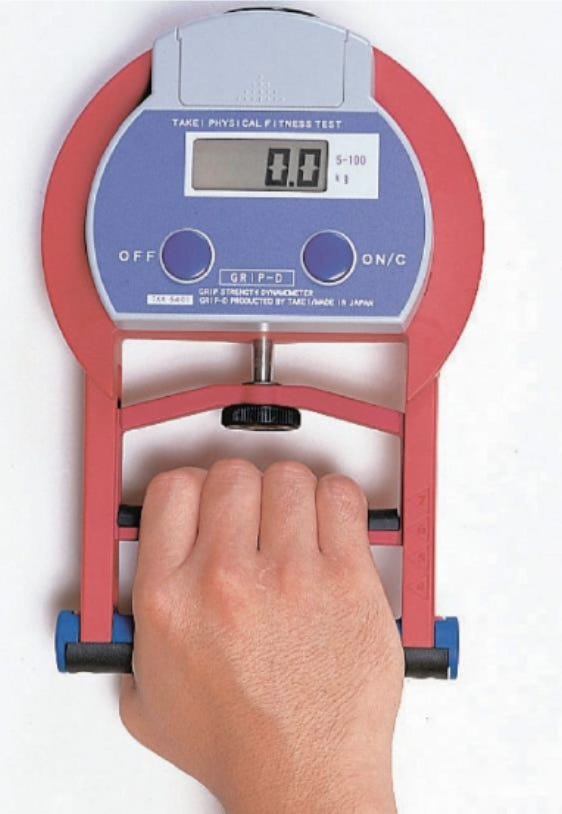
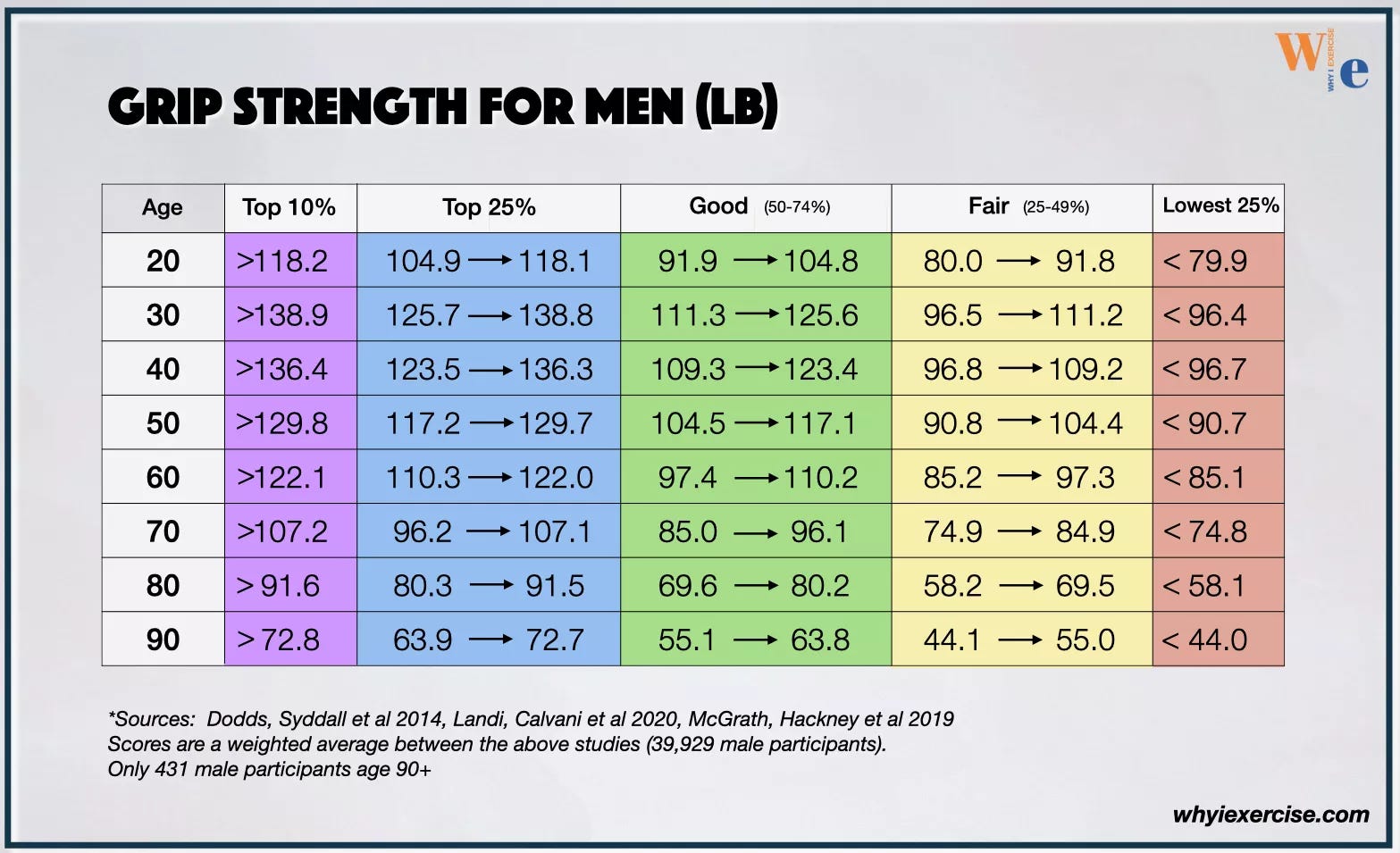
The process is simple enough: squeeze the handle as hard as you can for ~3s. However, you must either keep your arm straight down by your side or at a right angle - pick a method and be consistent. The device will then tell you your strength in kg or lbs. Take the average of 3 attempts for each hand.
You’re looking for two things.
Less than a 10% discrepancy between averages for your left and right hand.
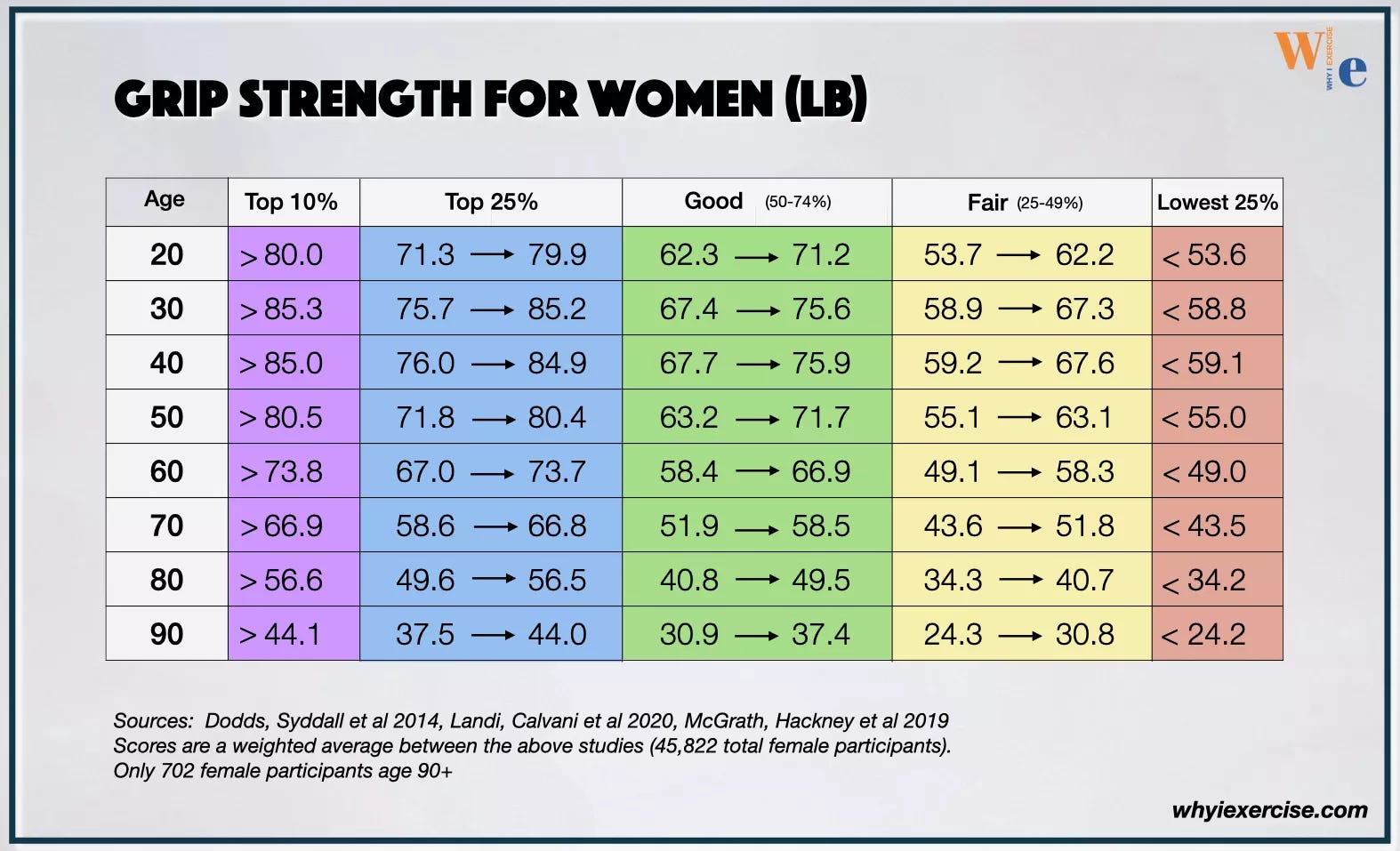
A score considered ‘good’ or better based on the data in the table below, provided by Why I Exercise.
The 30s Sit-To-Stand Test
Another brilliant clinically-used test. The process is simple enough once more. Sit on a chair (ideally one that encourages your thighs to be parallel to the floor when sitting at rest). Cross your arms over your chest and count how many times you can stand up and sit back down again in thirty seconds. Give yourself a point every time your bottom touches the chair.
The research-backed scores to aim for are in the table below. It’s worth noting here that the research starts with those aged 60, so if you’re younger than this, you really do have a good minimum set of scores to aim for. If you’re absolutely miles ahead of the ‘good’ scores, then stick to the hand grip test for now.
I’ve picked this test specifically for its simplicity. It can be done anywhere as long as you have a chair to hand and is a great test of lower body strength and endurance.
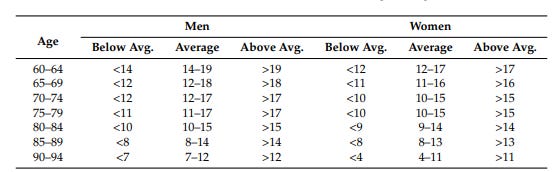
Ultimately, these tests provide a great assessment tool for the average person. If you don’t want to track your progress in the gym, you could do a lot worse than to perform these tests every three months or so. Ideally, of course, you want to be improving, since this provides the evidence that you’re effectively avoiding anabolic resistance.
My 6-Week Protocol To Follow For Muscle Health Over 40
Before we get onto the exercise protocol below, I’m going to assume that, after reading the paragraphs above, you are going to ensure that your protein intake and recovery are optimal.
As a small aside, I always recommend 5g of creatine as a daily supplement for those without any kidney issues. It is the safest and most-tested supplement going, improving lean tissue retention and strength, and possibly benefiting brain health, too. I endorse Awesome Creatine, available in the UK, by hitting this link.
As always, do make sure that you see a medical professional before starting a new exercise regimen. Simple red flags like high blood pressure or a family history of heart disease may be worth getting approval for.
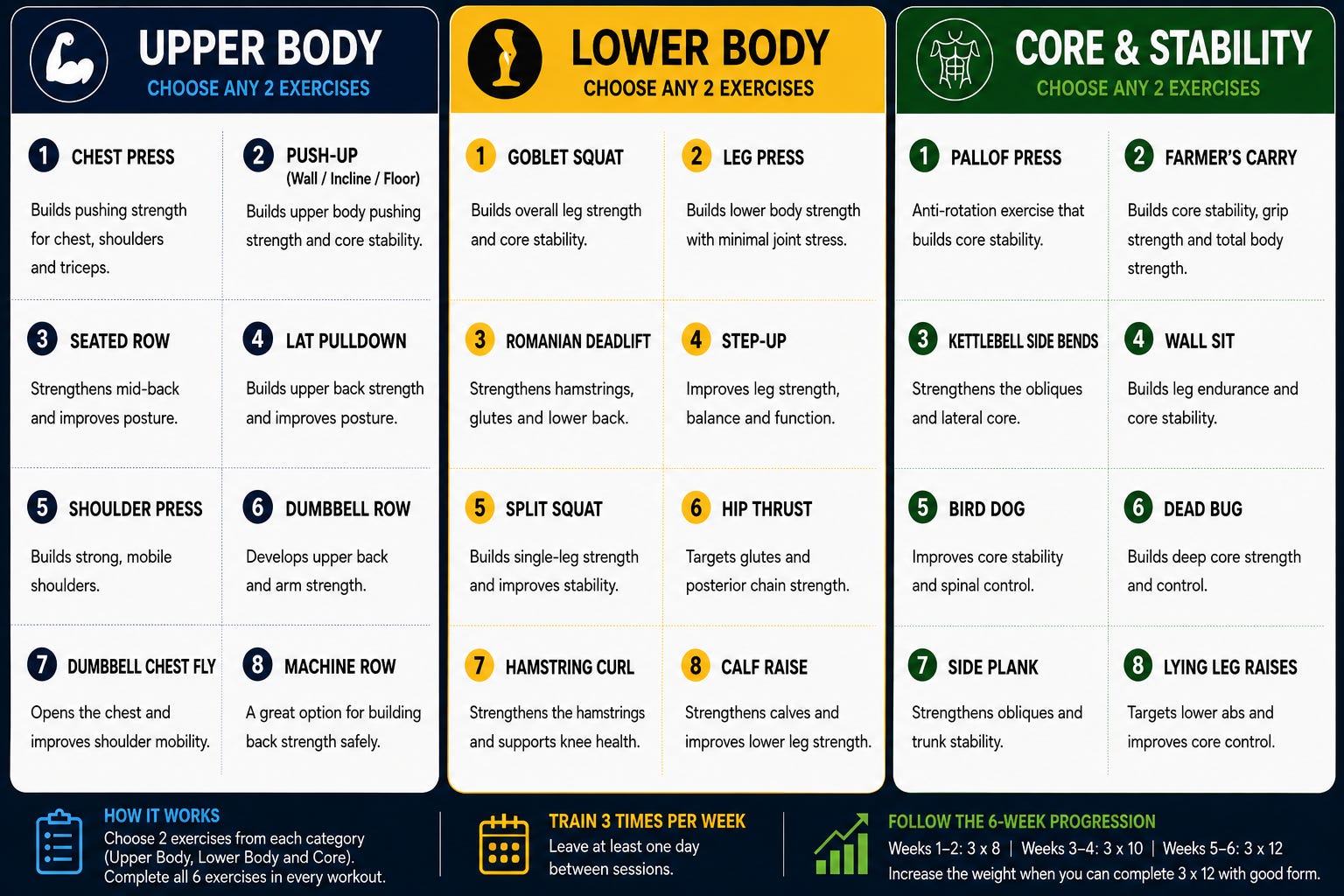
I’m going to try to make this as simple and inclusive for all as I possibly can. Below, you’ll notice three ‘pools’ of exercises. I want you to pick 2 exercises from each pool. This means you’ll have two upper-body exercises, two lower-body exercises, and two core/stability exercises in total. It really doesn’t need to be more complicated than that.
For the next six weeks, you’re going to perform these exercises 3 times per week. The only thing that will change will be the sets and reps prescribed. The reasons for this are threefold:
It allows you to become familiar with the movements.
You can guarantee exercise progression, the major counter to anabolic resistance.
It stops you from changing your routine every couple of weeks. You don’t need to shock the muscles with new exercises; this is fake news,
Rep and Set Schemes
Weeks 1 and 2: 3x8 reps or 30s per exercise.
Weeks 3 and 4: 3x10 reps or 45s per exercise.
Weeks 5 and 6: 3x12 reps or 60s per exercise.
After this point, you can sensibly increase the weight being used, or you can choose some new exercises and start the process again. I would recommend keeping a note of how much weight you use for each exercise, though. If nothing else, because the data will be interesting and you should be able to watch your progression.
It is important to stress that 6 weeks of exercise isn't going to drastically alter your appearance. However, this framework is great for those who want to guarantee progression without having to put too much time into planning their gym routines. You may well feel stronger after this initial 6 week period, especially if you're coming into it as a gym newbie, but physical appearance takes at least 6 weeks to begin to show, so it's unlikely that you'll notice more muscle in this time. However, fat loss may occur.
And finally, remember to regularly retest the two metrics from earlier in this newsletter. Grip strength and sit to stand performance should improve with exercise. I recommend re-testing every six weeks or so.
Now, typically I would include some form of GIFs or videos to guide you through these movements, but I don’t usually include 24 exercises in one newsletter! So I’ll leave this up to you: Would you like me to include/re-publish with videos in a couple of weeks’ time?
Before You Go
I hope you enjoyed this week’s article. It’s one of the most in-depth reviews that I have ever written.
Free subscribers now get two weekly articles, including a new workout every Friday, delivered straight to your inbox. Paid subscribers also get exclusive myth-busting newsletters as well as a monthly movement guide which outlines the major functional movement patterns in depth. So far, we have covered the squat and hinge patterns.
If you’re interested in upgrading, I have included a discount code below for you to try: 20% off all annual subscriptions bought in August 2026. See you next week and don’t forget to like, share and restack if you enjoy my work!
Morton RW, Traylor DA, Weijs PJM, Phillips SM. Defining anabolic resistance: implications for delivery of clinical care nutrition. Curr Opin Crit Care. 2018 Apr;24(2):124-130. doi: 10.1097/MCC.0000000000000488. PMID: 29389741.
López-Bueno R, Andersen LL, Koyanagi A, Núñez-Cortés R, Calatayud J, Casaña J, Del Pozo Cruz B. Thresholds of handgrip strength for all-cause, cancer, and cardiovascular mortality: A systematic review with dose-response meta-analysis. Ageing Res Rev. 2022 Dec;82:101778. doi: 10.1016/j.arr.2022.101778. Epub 2022 Nov 1. PMID: 36332759.
A great post as ever Ben! I really love when people bring Sarcopenia forwards as an issue that we can all address. Keep them coming 💪
Great point about adding heavier resistance training for people who mostly do yoga or bodyweight work. I'm curious about your thoughts on recovery when someone starts progressively overloading and DOMS begins affecting the next workout. Beyond sleep and protein, what do you find makes the biggest difference in getting people ready for the next quality session?