
Stop Aiming For 10,000 Daily Steps
If it seems too much, then a different number might be much more suitable...

It surprises me that more people don’t know this: The goal of 10,000 steps per day is based on absolutely nothing. In fact, even worse, it is a product of a 60-year-old marketing campaign in Japan, which occurred in the lead-up to the Tokyo Olympics of 1964.
In the build-up, a company called Yamasa decided to create a device for the health-conscious. A nifty idea, considering that Olympic fever was about to hit the country. The product ended up being the first-ever wearable pedometer: a device which could count how many steps you took every day (picture of the original device below).
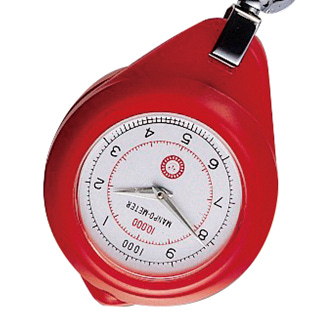
Now, what could they call this device? Yamasa settled on the name Manpo-kei. And this is where we circle back around to the very start. Translated, this means:
Man = 10,000
Po = Steps
Kei = Meter
Some people even speculate that 10,000 was also chosen because the character for this number, when written in Japanese, has two ‘legs’ and looks like it could be walking. Feel free to look it up yourself; I personally think that this is a bit of a stretch.
In 2026, the “10,000 Steps Meter” is still influencing our daily habits, but not backed by any real research or science, simply through the convenience of choosing a round number to work with. If you want to know how many daily steps you should be aiming for, then you’ll be pleasantly surprised that the answer may be slightly less than 10,000…

What Does The Research Actually Say?
The past five years or so have been incredibly insightful for research on daily activity. Wearable technology is now more popular than ever, which makes this bracket of research more accurate, reliable and easy to perform.
Last year, a very large meta-analysis was published on daily step counts and their associated benefits1. Over 160,000 individuals were studied, with their daily step counts analysed to help with the assessment of the risk of mortality from a whole host of diseases, from dementia to cancer. To date, it is probably the highest-powered piece of research on the benefits of walking every day and how it can affect one’s risk of developing certain diseases.
Before we look at the results, take a look at the poll below…
10,000 Steps Per Day is Good, But Not Necessarily The Golden Target
This study primarily assessed the differences in two populations who averaged a range of different daily steps, from 2000 to 12,000.
The evidence was clear: compared to the low target of 2000 steps per day, those who regularly hit just 7000 daily steps were associated with:
A 47% lower risk of all-cause mortality
A 25% lower risk of cardiovascular disease incidence
A 47% lower risk of death from cardiovascular disease
A 36% lower risk of death from cancer
A 14% lower risk of type 2 diabetes
A 38% lower risk of dementia
A 22% lower risk of depressive symptoms
A 28% lower risk of falls
Therefore, 7000 steps per day provides a much more realistic target for those who are primarily desk-based and not getting much, if any, forms of structured, regular exercise. However, even 7000 daily steps might not be the minimum required dose…
Even 4000 Daily Steps Have Some Benefits vs 2000 Daily Steps
Just doubling from 2000 to 4000 steps per day can reduce all-cause mortality risk by 36%. It is especially good news for heart health, with these additional 2000 daily steps reducing mortality from cardiovascular disease by 39%.
For More Active Individuals, 12,000 Daily Steps Can Offer Substantial Benefits
At this level of activity, cancer mortality is halved compared with 2000 steps per day. All-cause mortality is reduced by 55%, depressive symptom risk is 39% lower and cardiovascular disease mortality is reduced by 52%.
But “More is Better” Doesn’t Necessarily Ring True (Statistically At Least)
I know that the statistics involved here can be complicated, but it appears as though there’s not necessarily a linear dose-response effect across these categories. Essentially, this means that, for some conditions, there appears to be a plateau in the benefit of doing a certain number of steps.
Let’s take a look at dementia, for example. In this analysis, researchers found no additional reduction in dementia risk for those who walked 12,000 steps per day compared to those who walked 8000.
For fall risk, there seems to be no statistically significant benefit of doing more than 5000 steps per day, although this does beg the question of whether you’re simply more likely to fall if you spend more time walking…
However…
Linear dose-response relationships exist for cancer, diabetes and depressive incidence. It appears as though the risk of developing these conditions is lessened with every step you take.
However, Being Active Is Only One Part of The Equation
I can already see the cogs turning in your heads as you read this…
“What if I bank my 7000 steps before work, then that’s me done for the day!”
Well, there is actually some good news here. The morning walk could offset some of the drawbacks of a sedentary job. Ironically, according to research conducted on 72,000 people in the UK Biobank, this is where pushing your daily step count to 10,000 may offer additional benefits. At this threshold, the authors found a 39% lower mortality rate, which could offset the negatives of excess sitting time. More reassuringly, 50% of this benefit can be achieved by hitting between 4000 and 5000 steps per day.
If in doubt, I always return to the general consensus when it comes to any form of activity: More is better than less.
Easy Ways To Up Your Step Count
There are a few methods of ‘sneaking’ extra steps into your routine, and I use most of these on a regular basis.
Make/take phone calls while standing up
The human brain will naturally and subconsciously make you pace about whenever you’re on a call and not sitting down. So, next time you need to make a phone call, stand up before starting, and you’ll soon notice how quickly this can benefit your step tally.
Add a brief walk after meals
Great for metabolic health, glucose control and insulin sensitivity. Just ten minutes of walking after a meal may be enough to blunt any excessive glucose responses, and, done three times a day, will add hundreds, if not thousands of steps to your routine.
Listen to the inactivity alert on your smartwatch
Most smartwatches have inactivity alerts, but if you’re anything like me, you completely ignore them or become desensitised to them. That buzz you feel after an hour of sitting? It’s a prompt to get moving again. It’s trying to help you break up your sedentary time. Even if you listen to it once during the day, that could be another few hundred steps to your tally.
Park further away, or get off one step early
These hacks have been around forever for a reason. Next time you go to the supermarket, look at where most people park. It’ll be toward the main entrance. If you’re able to walk an extra minute or two, park a bit further back. It doesn’t have to be an effort; it’s a short bout of added exercise. If you often commute to the city, then getting off one stop early could add a 5-minute walk to your daily routine. Again, nothing huge, but it compounds over the weeks. Look after these small changes, and you’ll notice the improvements as time goes on.
Know Someone Who Would Find This Useful?
Friends or family feeling down or unmotivated about their low step count or activity levels? If so, please do two things:
Share using the button below.
Hit the ‘restack’ button.
This research could shift their perspective and get them on track.
Paid Subscribers
Finally, to those who pay for their subscription: Make sure you read your most recent exclusive newsletter on the truth about “No pain, no gain”. I will include the link below.

If you’re interested in getting these exclusive newsletters, monthly materials, and helping support me with my upcoming book, please do upgrade your subscription by hitting the button below. Thanks, and see you next week!
Ding D, Nguyen B, Nau T, Luo M, Del Pozo Cruz B, Dempsey PC, Munn Z, Jefferis BJ, Sherrington C, Calleja EA, Hau Chong K, Davis R, Francois ME, Tiedemann A, Biddle SJH, Okely A, Bauman A, Ekelund U, Clare P, Owen K. Daily steps and health outcomes in adults: a systematic review and dose-response meta-analysis. Lancet Public Health. 2025 Aug;10(8):e668-e681. doi: 10.1016/S2468-2667(25)00164-1. Epub 2025 Jul 23. Erratum in: Lancet Public Health. 2025 Sep;10(9):e731. doi: 10.1016/S2468-2667(25)00199-9. PMID: 40713949.
Beware of conflating correlation with causation. I have zero doubt that more walking, pedaling, or pool laps are beneficial, but we mustn’t lose sight of the fact that those who DO do activity CAN do activity. I.E., they likely tend to be healthier to begin with.
Thank you for writing this. I strongly feel the step counting is massively overrated. I get that it’s an easy thing to get people to focus on but it rarely is the whole picture. Also for folks with busted joints (like myself) walking is really not the best form of low impact cardio.